AI
AI Chatbots for Customer Service: When They Help, and What Australian Businesses Need to Get Right
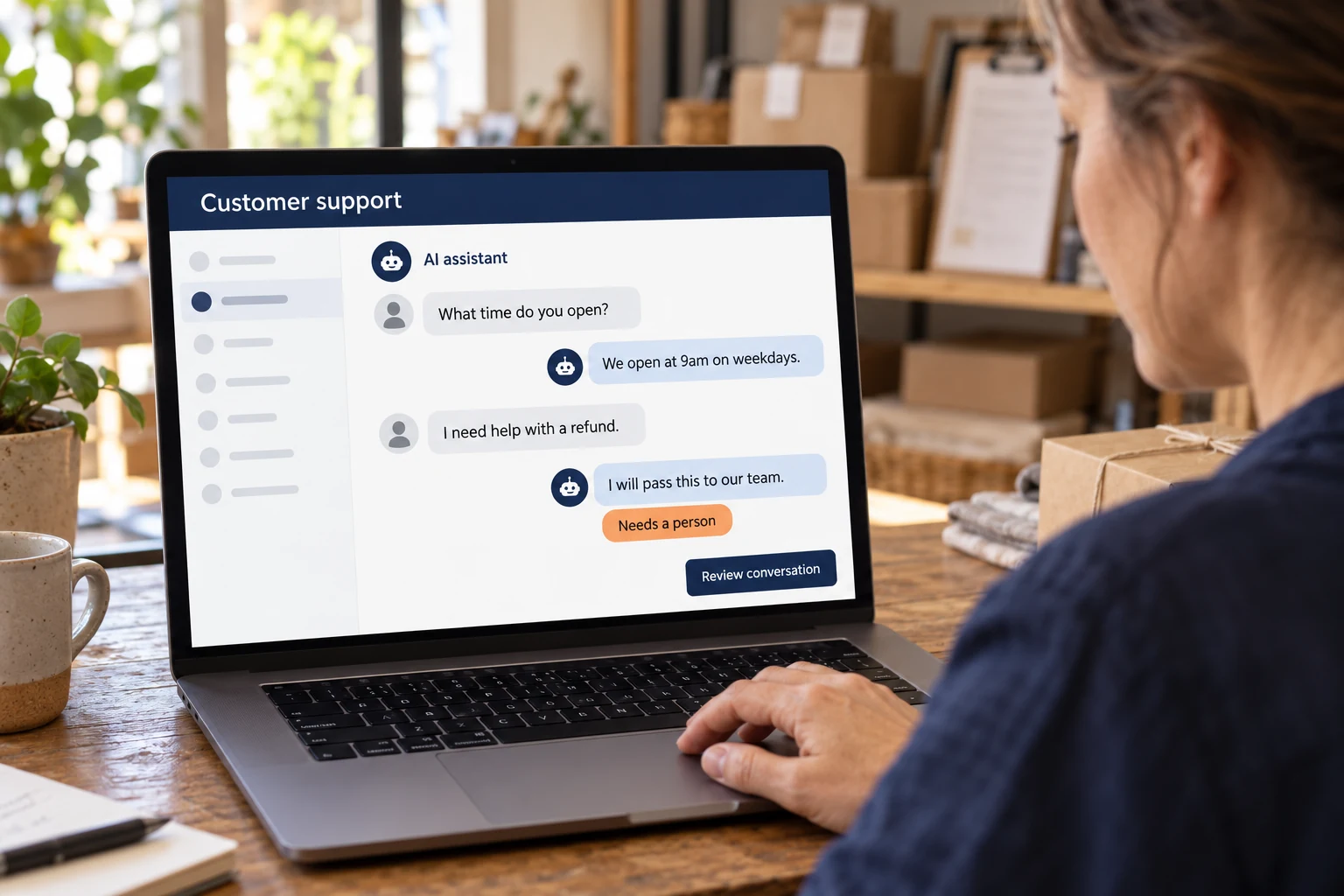
A chatbot is one of the easiest AI tools for a small business to deploy, and it speaks to customers directly in the business's name.
When a chatbot gets the opening hours or an order status right, customers are served faster and staff get time back for work that needs a person. When it gets a price, a refund policy or a service condition wrong, that answer still counts as information the business gave.
This article brings together what Australian regulators have said about chatbot responsibility, and the principles that help a business deploy one safely.
Key Takeaways
- OAIC guidance (21 October 2024, updated 17 January 2025) says public-facing AI tools such as chatbots should be clearly identified as AI, and privacy policies should explain how the business uses AI.
- The Privacy Act applies to businesses with annual turnover above $3 million, and to some small businesses regardless of turnover, such as health service providers.
- According to the ACCC, misleading conduct breaches the law whether or not the business intended it, and the rule applies to websites too.
- In February 2024, a Canadian tribunal held Air Canada responsible for incorrect information given by its website chatbot.
What Chatbots Do Well
Chatbots work best on questions that repeat, have a clear answer and need little judgement: opening hours, service areas, how to book, what documents to bring, where an order is. For many service businesses, these make up most of the day's messages.
A chatbot can also answer outside business hours and in more than one language, which helps businesses whose customers speak both Vietnamese and English. The condition is that answers come from content the business has approved, not from the AI's own guesses.
Illustrative chatbot workflow with a person in the loop, prepared by Holdrix based on OAIC recommendations.
Risk 1: The Chatbot Gets It Wrong, and the Business Answers for It
Moffatt v Air Canada (2024 BCCRT 149) is a well-known example. A passenger asked the chatbot on Air Canada's website about bereavement fares and was told he could apply for the discount after buying his ticket. Another page on the same website said the opposite.
Air Canada argued that the chatbot was effectively a separate entity and that the airline was not responsible for what it said. As law firm McCarthy Tétrault summarises, the tribunal rejected that argument, found the airline had not taken reasonable care to make sure the chatbot was accurate, and ordered it to compensate the passenger.
That ruling is Canadian, not Australian. A similar principle already sits in Australian law: the ACCC states that a business can engage in misleading conduct whether or not it intends to, and that this covers every channel, websites included. What a chatbot says about prices or customer rights needs the same control as anything else the business publishes.
Risk 2: Customers' Personal Information
Customers often share their name, phone number, address or details of their situation with a chatbot. Under the OAIC's guidance on commercially available AI products, privacy obligations apply both to personal information entered into an AI system and to AI output that contains personal information.
The guidance recommends doing due diligence before adopting an AI product, identifying public-facing tools as AI, updating the privacy policy, and using personal information only for the purpose it was collected. The OAIC also recommends against entering personal information, especially sensitive information, into publicly available generative AI tools.
On who is covered, the OAIC explains that most businesses with annual turnover of $3 million or less fall outside the Privacy Act. Some small businesses are covered regardless of turnover, such as health service providers and businesses that trade in personal information. Even where it is not required, following these principles helps keep customers' trust.
Holdrix AI customer service assistants
Five Principles for Deploying a Chatbot
1. Tell customers they are talking to AI
Name it "[Business name] AI assistant" and say so in the first message. This is a direct OAIC recommendation, and it helps customers know when to ask for a person.
2. Answer only from content the business has approved
Prices, refund policies, warranty terms and hours should come from a source the business approves and keeps current. When that source has no answer, the chatbot should say so and hand over to staff rather than guess.
3. Hand sensitive situations to a person
Complaints, refund requests, quotes for complex jobs, and any question touching health, legal or financial matters should go to a person. Decide in advance who picks these up and how quickly they respond.
4. Collect only what you need
If the chatbot only needs a name and phone number to book, do not ask for more. Know where conversation data is stored and who can access it, and update the privacy policy to match.
5. Review conversations regularly
Each week, someone should read back a sample of conversations, especially those the chatbot could not answer or where the customer was unhappy. The OAIC stresses that AI use needs ongoing monitoring, not a set-and-forget setup.
When a Chatbot Isn't the Right Move
If the business only receives a handful of messages a day, saved replies and a well-written FAQ page may work better. A chatbot also isn't a good fit when most questions need professional judgement, or when nobody in the business has time to approve content and review conversations.
Common blockers we see in SME operations
Frequently Asked Questions
Does a small business have to follow the Privacy Act when using a chatbot?
Most businesses with annual turnover of $3 million or less are outside the Privacy Act, but some are covered regardless, such as health service providers. Check your own situation on the OAIC website.
Do we need to tell customers they are talking to AI?
The OAIC recommends that public-facing AI tools such as chatbots are clearly identified as AI. It also helps customers know when to ask for a person.
Can a chatbot answer in Vietnamese?
Yes. Current AI models handle both Vietnamese and English. Test answers in both languages before going live, especially for industry terms.
The Short Version
A chatbot helps a business answer repeat questions quickly, but every answer remains the business's responsibility. Label it as AI, answer only from approved content, and always have a person ready for the sensitive cases.
Holdrix handles the tech, you focus on growth.
This article is general information, not legal advice. Seek professional advice for your specific situation.
Wondering whether a chatbot fits the way you look after customers? Book a consultation.
Is a chatbot right for your business?
Talk to the Holdrix team for advice and find the right solution for your business.